
Here’s a number that might surprise you: in a 2026 survey of 2,000 wedding guests, 37% said they regretted their outfit choice within the first hour of the reception. And the most common regret? The color. Too bright, too dark, or — most often — too close to the bridal party’s palette. Khaki sits in a strange middle ground. It’s neutral enough to be safe, but vague enough to go very wrong. This article walks through exactly when a khaki wedding guest dress works, when it backfires, and how to tell the difference before you buy.
Why Khaki Works as a Wedding Guest Color
Khaki belongs to the neutral family — beige, tan, sand, olive-tinged browns. These colors have one major advantage at weddings: they rarely clash with the bridal party’s chosen shades. A bride in ivory or champagne won’t feel upstaged. A bridesmaid in dusty rose or sage green won’t look mismatched next to you.
But neutral doesn’t mean invisible. The right khaki dress can read as polished and intentional. It signals that you understood the assignment: look good, but don’t compete with the couple.
The Underlying Problem Khaki Solves
Most wedding guest dress disasters stem from one mistake: picking a color that fights the setting. A neon dress at a garden wedding. A black gown at a beach ceremony. Khaki sidesteps that entirely. It’s a color that adapts to the venue — earthy enough for outdoor, refined enough for indoor. The problem it solves is decision fatigue. When you’re unsure of the dress code, khaki is a low-risk anchor point.
When Khaki Fails: The Three Red Flags
Khaki isn’t foolproof. Three situations where it flops:
- Too close to white. A pale khaki that reads as cream or off-white can look like you tried to wear white and failed. If you hold the dress up to a white shirt and can barely tell the difference, skip it.
- Too casual. Khaki is historically a utility color — military uniforms, cargo pants, safari jackets. If the fabric is thin cotton or looks like a work shirt, it won’t read as wedding-appropriate.
- Wrong fabric. Khaki in matte jersey or stiff linen can look drab. The color needs texture or sheen to feel deliberate.
How to Pick a Khaki Dress That Reads as Wedding Guest, Not Safari Tourist
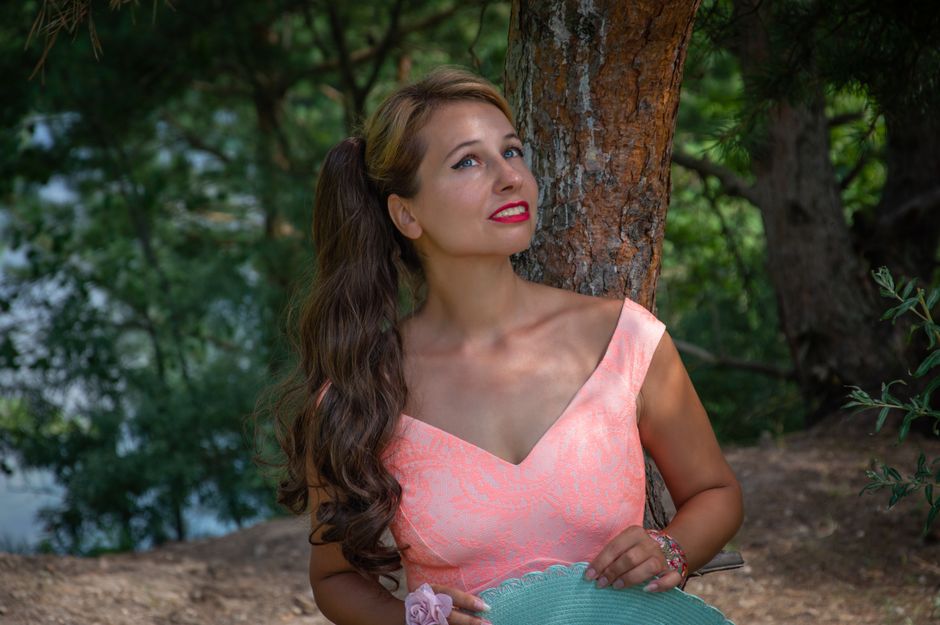
The difference between “chic neutral” and “I grabbed this from a clearance rack” comes down to three factors: fabric, silhouette, and styling. Get these right, and khaki goes from bland to intentional.
Fabric First: What Elevates Khaki
Khaki needs a fabric with some weight or finish. Silk charmeuse in a sand shade catches light and moves well — it reads as evening-appropriate. Crepe with a slight drape avoids the stiff, military look. Linen blends work only if the weave is tight and the dress has structure (think tailored midi, not a sack dress). Avoid anything with a visible ripstop weave, cargo pockets, or belt loops — those are safari jacket details, not wedding dress details.
Silhouette: Structured Over Slouchy
Khaki rewards tailoring. A wrap dress with a defined waist, a sheath dress with a slight flare at the hem, or a fit-and-flare midi all work because they give the color a shape to work with. Slouchy, oversized, or shift dresses in khaki tend to look like you’re wearing a tent. The exception: a bias-cut slip dress in a polished fabric like satin-backed crepe.
The Accessory Rule: Add Contrast
Khaki paired with beige accessories looks washed out. You need contrast. Nude shoes should be a shade darker than the dress. Gold or tortoiseshell jewelry adds warmth. A cognac leather clutch breaks up the monotone. If you wear a khaki dress with tan sandals and a straw bag, you’re dressed for a picnic, not a wedding.
| Fabric | Works for Khaki? | Why |
|---|---|---|
| Silk charmeuse | Yes | Catches light, feels luxurious, reads formal enough |
| Crepe (viscose or polyester) | Yes | Drapes well, hides wrinkles, mid-weight |
| Linen (loose weave) | No | Too casual, wrinkles badly, looks like beachwear |
| Cotton poplin (stiff) | No | Reads as shirt fabric, not dress fabric |
| Satin-backed crepe | Yes | Best of both — drape + sheen |
The Khaki Dress Decision Tree: When to Buy, When to Skip
Not every wedding guest needs a khaki dress. Here’s a framework to decide if it’s right for your specific event.
Buy a khaki dress if:
- The dress code says “garden party,” “cocktail,” or “semi-formal”
- The wedding is outdoors (vineyard, barn, beach, forest)
- The season is spring, summer, or early fall
- The bridal party is wearing a color that would clash with navy, black, or red
Skip khaki if:
- The dress code says “black tie” or “formal” — khaki is too light and too casual for evening formality
- The wedding is in winter — khaki reads as washed out against dark coats and heavy textures
- The bride has asked guests not to wear neutrals (some brides do this to avoid confusion with the bridal party)
- You have a warm undertone and khaki makes you look sallow — not everyone can wear this color well
Three Real Khaki Dresses That Work (and Why)
Here are three specific dresses that demonstrate what a well-executed khaki wedding guest dress looks like. These are real products you can find right now.
Reformation Midi Slip Dress in Khaki
This dress ($248) comes in a color called “Khaki Green” — a muted olive-beige. It’s made from LENZING™ EcoVero™ viscose, which gives it a soft drape and slight sheen. The bias cut means it skims the body without clinging. It works for cocktail and semi-formal dress codes. The key detail: adjustable spaghetti straps let you change the neckline, which helps avoid the “nightgown” look that bias-cut slip dresses sometimes have.
ASTR the Label Midi Wrap Dress in Sand
ASTR’s wrap dress ($198) in “Sand” is a true neutral khaki — not greenish, not grayish. The fabric is a polyester-spandex crepe with enough weight to hold the wrap shape. It hits below the knee (midi length), which is the safest length for a wedding guest. The wrap style is universally flattering and adjustable for different bust sizes. The downside: polyester crepe can trap heat, so this works better for spring/fall weddings than peak summer.
Hill House Home The Ellie Dress in Natural
Hill House calls this color “Natural” — it’s a warm, sandy khaki. The Ellie dress ($195) is a smocked bodice midi with a flowing skirt. The smocked back means no zipper, and the fit is forgiving across sizes. This dress works best for garden or daytime weddings. The fabric is a cotton-linen blend, which is breathable but wrinkles easily — plan to steam it before the event. The Ellie dress has a distinct preppy aesthetic; it won’t suit a city rooftop wedding.
Common Mistakes People Make With Khaki Wedding Guest Dresses
These are the failure modes you see most often. Avoid them.
Mistake 1: Wearing Khaki to a Winter Wedding
Khaki is a warm-weather color. Against a dark winter coat, it looks washed out and unfinished. If the wedding is in November through February, pick a deeper neutral like charcoal, forest green, or burgundy instead. Khaki in winter reads as someone who forgot the season.
Mistake 2: Not Checking the Dress Code Against the Venue Lighting
Khaki photographs differently under various lighting. A dress that looks like a warm beige in your bedroom might look gray or green in a church with fluorescent lights or in golden-hour outdoor photos. Test the dress under natural daylight and under warm indoor light before committing. If it looks muddy or sickly in either, return it.
Mistake 3: Pairing Khaki With White Accessories
White shoes, a white bag, or a white belt with a khaki dress creates a high-contrast combo that can look like you’re wearing a uniform. Worse, it can accidentally mimic the bride’s color palette if she’s wearing white with neutral accents. Stick to darker neutrals (brown, black, navy) or metallics (gold, bronze).
Mistake 4: Choosing a Dress That’s Too Casual in Cut
A khaki t-shirt dress with a drawstring waist is not a wedding guest dress. It’s a casual weekend dress. The same rule applies to anything with cargo pockets, hoods, or visible sportswear details. If you can wear it to run errands, it’s not special enough for a wedding.
When Khaki Is the Wrong Choice: Alternatives That Work Better
Khaki isn’t for everyone or every event. Here are the situations where you should pick something else, and what to pick instead.
Situation 1: You have a warm olive or yellow undertone. Khaki can make you look sallow or jaundiced. Instead, try dusty sage green (cooler, more flattering) or warm taupe (darker, more contrast). Brands like Everlane and Quince carry taupe dresses that read as neutral without the yellow cast.
Situation 2: The dress code is black tie optional. Khaki is too light and too informal. A navy blue gown or a deep burgundy midi signals that you respect the formality. Rent the Runway has a solid selection of formal gowns in those colors starting at $30 for a 4-day rental.
Situation 3: The wedding is at night. Khaki disappears in dim lighting. You’ll look like a beige blob in photos. Pick a jewel tone — emerald, sapphire, amethyst — which photographs well and stands out against dark backgrounds. Lulus carries jewel-toned wrap dresses for around $70 that are wedding-appropriate and evening-ready.
Situation 4: You’re a plus-one and don’t know the bridal party colors. Khaki is a gamble. If the bridesmaids are wearing champagne or ivory, you’ll look like you tried to match them. The safer bet is a medium blue (not navy, not pastel) — it’s neutral enough to not clash, but distinct enough to not confuse. ASOS DESIGN has a midi shirt dress in “Powder Blue” for $65 that fits this brief perfectly.